
Every fall, I notice a familiar pattern across college athletics. When teams sit down to plan their fall texting strategy, the focus naturally lands on the copy itself, crafting the opening line, debating message frequency, or tweaking a renewal sequence.
While message content is undeniably important, focusing solely on the "what" before defining the underlying strategy often leaves performance on the table before the first text is even sent.
Teams should also be building audience segments with clean data so they’re confident who is on the receiving end of these messages. The programs that struggle almost always have a messaging problem on the surface and a data problem underneath it.
Here are the questions I’d ask your team to help build a fall SMS strategy that earns its place on the lock screen instead of getting opted out by Halloween.
1. Is your fan list clean or outdated?
Numbers change. Students graduate. Fans who opted in for a single promotion two seasons ago aren't primed for a mass text the first week of September. Before you write a fall campaign, run a low-stakes re-engagement send. Confirm a schedule preference or a favorite sport and use it to clean the list, not just to say hello.
💡Save your budget for your most engaged fans: Our clients saved an estimated $1.1M over the past 2 years due to FanThreeSixty's data deduplication efforts
2. Do you actually know who's who, or just who has purchased?
A ten-year season ticket member, a new student, and a parent of a recruit are three different relationships with your program, and they should not get the same text. This only works if that distinction already lives in your data. Build your audience segments before you're even writing the copy.3. Is your first text an audition or a blast?
Fans decide whether texting is worth keeping in the first message. Lead with something only a text does well: a keyword to join, a countdown, early access tied to the home opener, and treat that first send as the moment you earn the channel, not the moment you start using it.
4. Are you reserving SMS for what actually needs it?
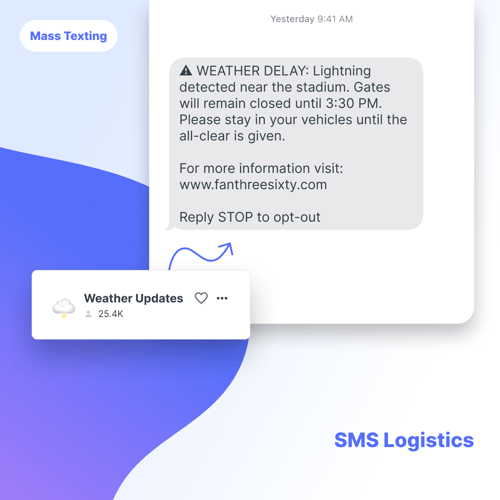
Weather delays, parking changes, gate shifts. These belong in text because SMS carries a 90%+ open rate with most opens landing in the first few minutes, and that only stays true if you don't spend it on things email could have handled. The fastest way to lose that advantage is treating every promotion like a logistics alert.
5. Is your renewal inquiry a sequence or a single message?
The departments seeing real revenue from fall texting aren't sending one "renew now" text. They're running short sequences, announce, remind, create urgency, close, because that mirrors how people actually decide, not how marketing calendars are built.
6. Are your sponsors riding along, or competing for the same three minutes?
A parking alert presented by a local business. A concession offer backed by a beverage sponsor. Fall is when sponsor budgets are freshest, and fan attention is highest, so fold sponsor value into texts that are already useful instead of sending a separate promotional message that competes with everything else hitting that fan's phone.
7. Is your cadence planned, or improvised week to week?
The fastest way to lose a subscriber is texting them about the same flash sale that just hit their inbox and their push notifications. Map your SMS cadence against email and app before the season starts. If texting has to compete with your own other channels, it's already lost some of its value.
8. Are you watching opt-outs like a KPI?
A rising opt-out rate early in the season tells you your strategy is off long before it shows up in ticket revenue. Track click-through, redemption, and opt-out together from the first send, and treat week one and two as a live test before locking in the rest of the season.
The Real Foundation
If you're planning your SMS marketing strategy and starting with the copy, you're starting one step too late. Start with whether your data can actually support the segment you're about to write for.
Want to see what this looks like with your own fan data? FanThreeSixty's Texting product integrates directly with our Fan Data Platform, so audience segments aren't something you build campaign by campaign. They're already there.